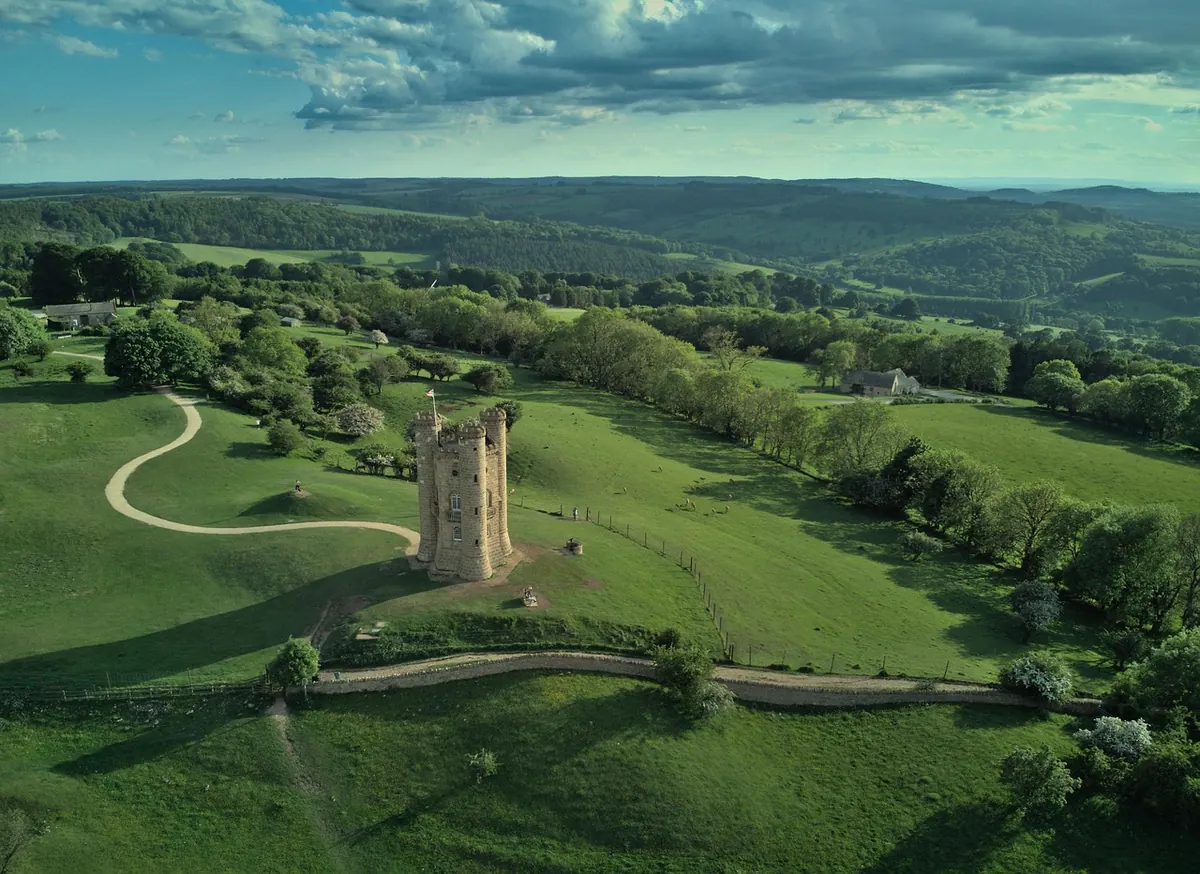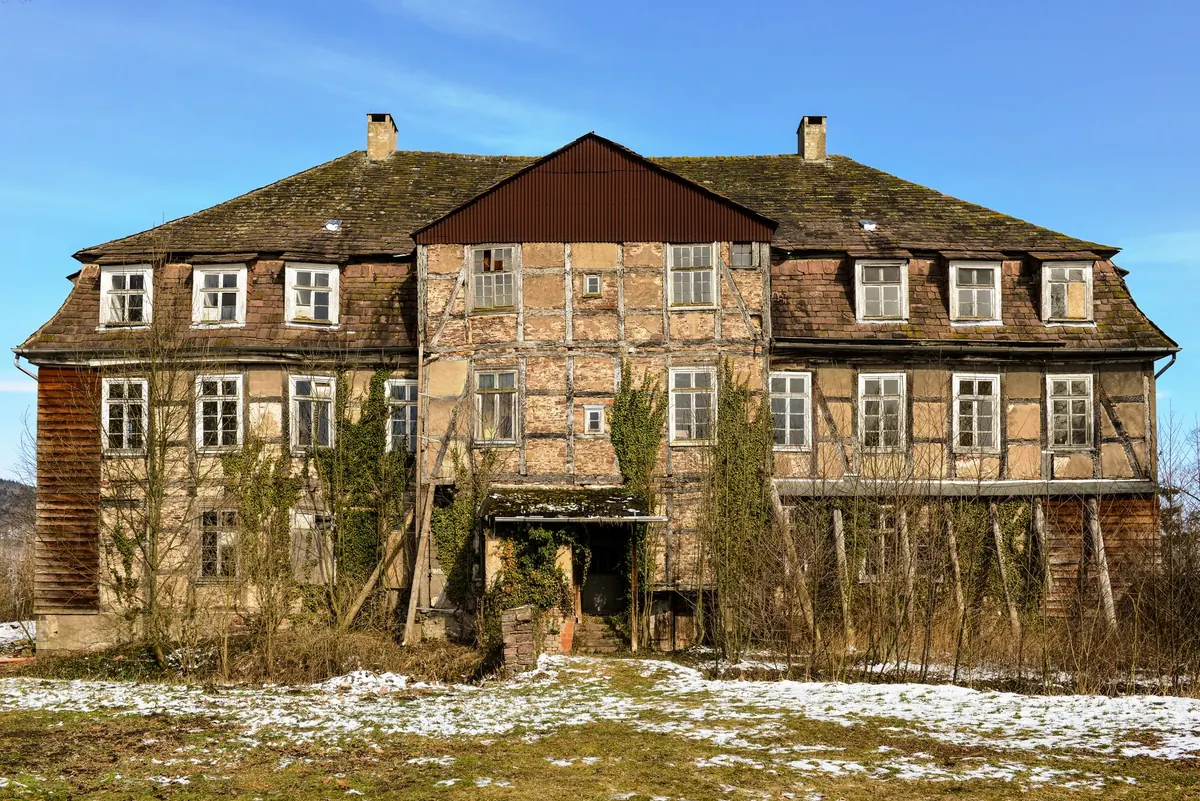
A lodge at the end of a long drive. A walled kitchen garden with peach trees still trained against the brick. A stable block with a clock that stopped in the 1970s. Anyone who spends time around old estates meets the phrase "Grade II listed" eventually — in sale particulars, in a planning dispute, in an argument about whether a window can be replaced.
The grades themselves are widely misunderstood. People treat them as a score out of three, when they are really a statement about rarity, interest and the level of scrutiny a building will attract. Listing is not a preservation order that freezes a property in time. It is a framework for managing change, and knowing which grade applies to which structure — the house, the barn, the wall, the garden — is often the difference between a manageable project and an expensive enforcement case.
What Listing Actually Is
Listing is statutory designation. A national heritage body assesses a building against published criteria — architectural interest, historic interest, group value, age, rarity, intactness — and adds it to a register. In England that register is the National Heritage List for England, maintained by Historic England. Cadw handles Wales, where the grades are the same as England's. Scotland uses its own system of Category A, B and C, run by Historic Environment Scotland. Northern Ireland uses A, B+, B1 and B2. Anyone can nominate a building; owners are notified and can make representations.
Listing rarely travels alone. An estate is usually a stack of overlapping designations: scheduled monuments for earthworks and buried archaeology, registered parks and gardens, conservation areas, tree preservation orders, sometimes a World Heritage Site boundary. Locally listed buildings carry no statutory protection of their own but are treated as a material consideration in planning decisions.
The Three Grades, Level by Level
In England and Wales, listing comes in three grades.
- Grade I — buildings of exceptional interest, occasionally of international importance. The smallest group by a wide margin.
- Grade II* — particularly important buildings of more than special interest. This is where a great many estate structures land: orangeries, dovecotes, gatehouses, model farm buildings, garden temples.
- Grade II — buildings of special interest. The great majority of listed buildings in England sit here, from Georgian terraces to boundary walls, milestones, urns and railings.
Grade I in practice
Not every Grade I building is a palace — plenty of medieval parish churches and a handful of remarkable agricultural buildings share the grade. What they have in common is that almost any change will be examined closely. Expect to need a conservation-accredited architect, a structural engineer who understands historic fabric, and a heritage statement setting out why the work is necessary and how it affects significance. Insurers and lenders treat these buildings differently too. This is not a project for a general builder working from a sketch.
Grade II*: closer to Grade I than owners expect
The star is easy to overlook. Owners sometimes assume Grade II* sits comfortably between the two extremes. In practice the scrutiny is much nearer Grade I, particularly for interiors, joinery, plasterwork and historic plan form. Repointing a elevation in the wrong mortar, removing a secondary staircase or replacing handmade bricks with machine-made ones can all provoke serious objection.
Grade II: the grade most estates live with
Grade II protects character, not perfection. Sympathetic, reversible repairs carried out with matching materials are usually straightforward, and most conservation officers are pragmatic about small, well-argued changes. The real risk is the accumulation of minor alterations over decades — a window here, a partition there — until the building's interest has quietly eroded. "It's only Grade II" is a phrase that appears in a lot of enforcement files.
What Listing Does and Doesn't Control
Works that affect the character of a listed building — internally or externally — need listed building consent from the local planning authority. Demolition almost always needs it, even of a modest outbuilding. As a rough guide:
- Usually needs consent: replacing windows or doors with different materials or proportions; removing internal walls, fireplaces, staircases or panelling; new openings, extensions and roof lights; re-roofing in a different material; partial or full demolition.
- Usually does not: like-for-like repairs using matching materials and traditional techniques; routine maintenance such as clearing gutters and stopping leaks; internal decoration that leaves historic fabric untouched.
When in doubt, ask before you start. England and Wales allow applications for a Certificate of Lawfulness of Proposed Works, which confirms in writing that consent is not required. Unauthorised work is a criminal offence, and authorities can require it to be undone. They also hold powers to serve repairs notices on neglected buildings and, in urgent cases, to carry out emergency works and recover the cost from the owner.
An Estate Is Never Just One Building
Curtilage catches people out. Structures fixed to a listed building, and buildings that formed part of its land and served it before 1948, can be treated as listed by curtilage even when the list entry never mentions them. That can include garden walls, gates, statues, follies, ice houses, barns and privies. A Grade II house can therefore carry a long tail of protected fabric nobody warned the buyer about.
Registered parks and gardens are a separate designation, also graded I, II* and II. They are not listed buildings, but planning authorities must consider their special interest when deciding applications, which is why felling a veteran avenue or putting a track across parkland can be harder than expected. Scheduled monuments, including earthworks and buried remains, need their own separate consent from the relevant national heritage body.
What It Means for Visitors
Listing does not create a right of public access. Houses open to visitors generally do so because a trust or charity runs them, or because owners take part in schemes such as the National Trust or Historic Houses. Many estates open gardens, parkland or a tea room rather than the house itself, and the house and garden may sit on entirely different registers with different rules.
Worth remembering on a visit: keeping these places standing is expensive. Grant funding exists but is competitive and rarely covers routine maintenance — roofs, gutters and drainage are paid for by ticket sales, weddings, farming and, often, the owner's own pocket. Turning up, buying a ticket and treating boundaries, livestock and closures with patience does more good than most people realise.
Practical Steps for Owners, Buyers and Visitors
- Read the actual list entry. Find it on the national register and check what is described and what is not. Note the date of listing, which often explains a quirk in the wording.
- Check every designation, not just the building. Parks, gardens, monuments, conservation areas and tree orders all have their own procedures.
- Talk to the conservation officer early. Pre-application advice is inexpensive compared with a refused scheme or an enforcement notice.
- Use the right professionals. For anything substantial on a Grade I or II* building, commission a heritage statement or conservation plan and appoint conservation-accredited architects, surveyors and craftspeople.
- Keep records. Photographs, invoices and a maintenance log demonstrate good stewardship, and they help at the next planning application and at sale.
- Take specialist advice on insurance, tax and legal questions. The rules around work on listed buildings are their own corner of the rulebook, and general assumptions frequently prove wrong.
Grades are a starting point, not a verdict. They tell you how much care a building will demand, not how beautiful it is or how difficult its owner is. The estates that survive best are rarely the ones with the grandest architecture — they are the ones maintained patiently, one gutter and one gate at a time.
Photo: Manu Edition / Pexels